First Principles
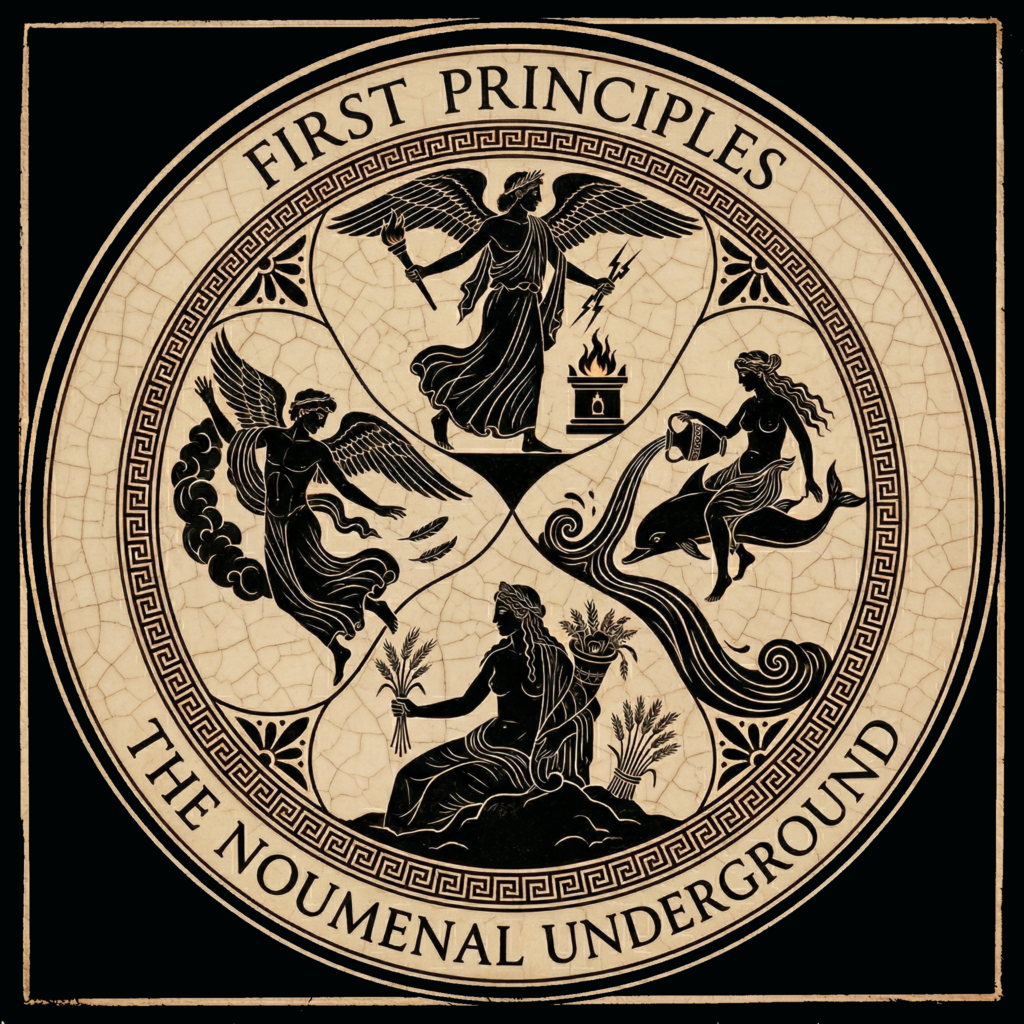
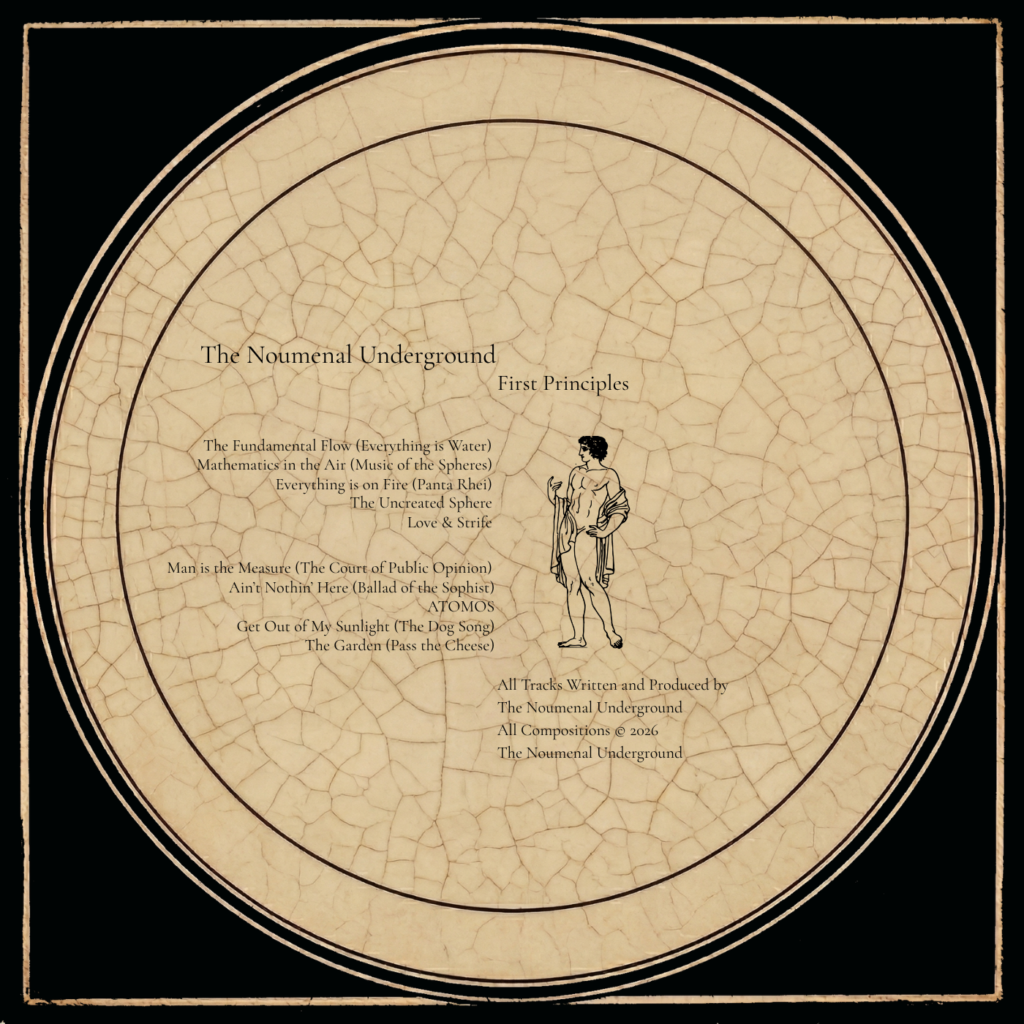
The record that started it all. First Principles explores the foundational thinkers of the Pre-Socratic world, tackling the raw elements of existence before philosophy moved into the city. From the elemental fire of Heraclitus (“Everything is Fire“) to the rigid logic of Parmenides (“Uncreated Sphere“) and the void of Democritus (“ATOMOS“), the band lays down a heavy, elemental sound. Driven by Elias Li and Arthur Kings’ electric guitars and Martin Black’s drum machines, this album is a kinetic search for what the universe is truly made of.
From Cosmos to Cave
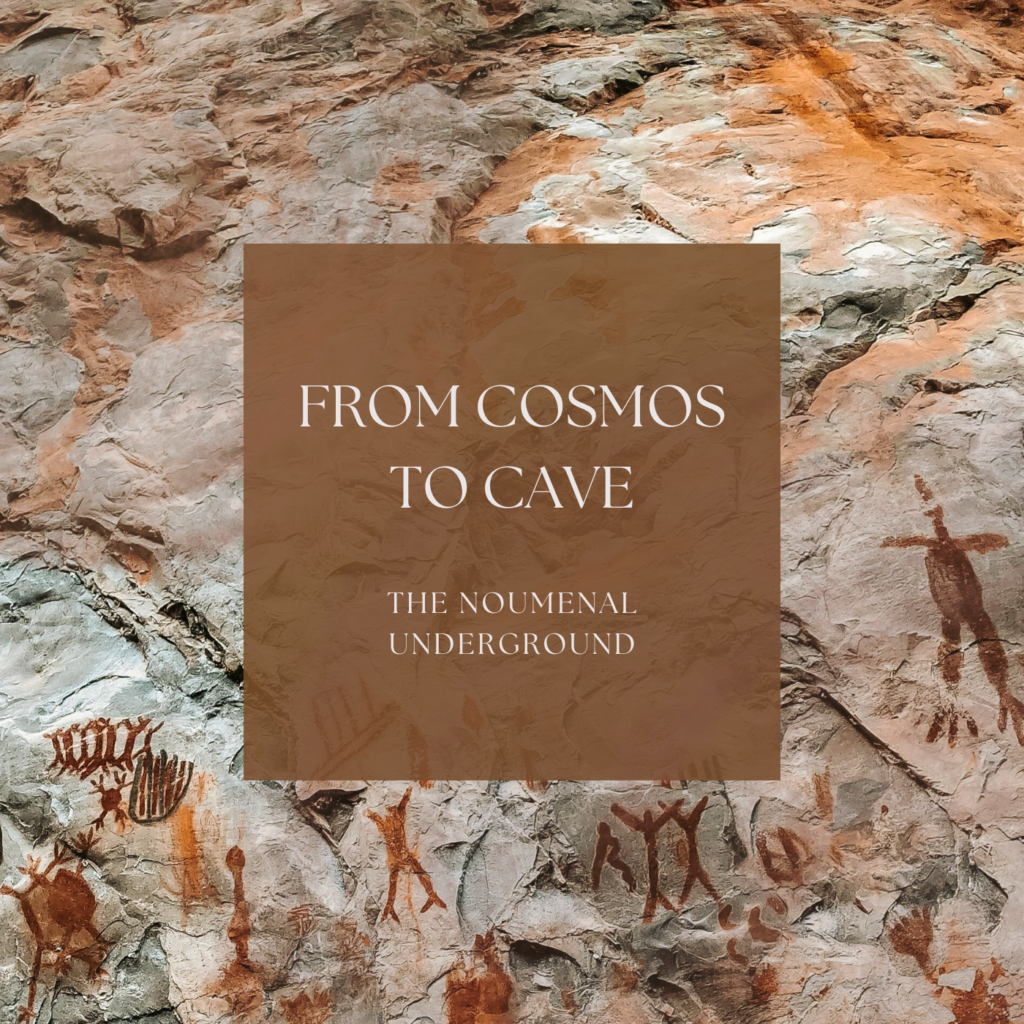
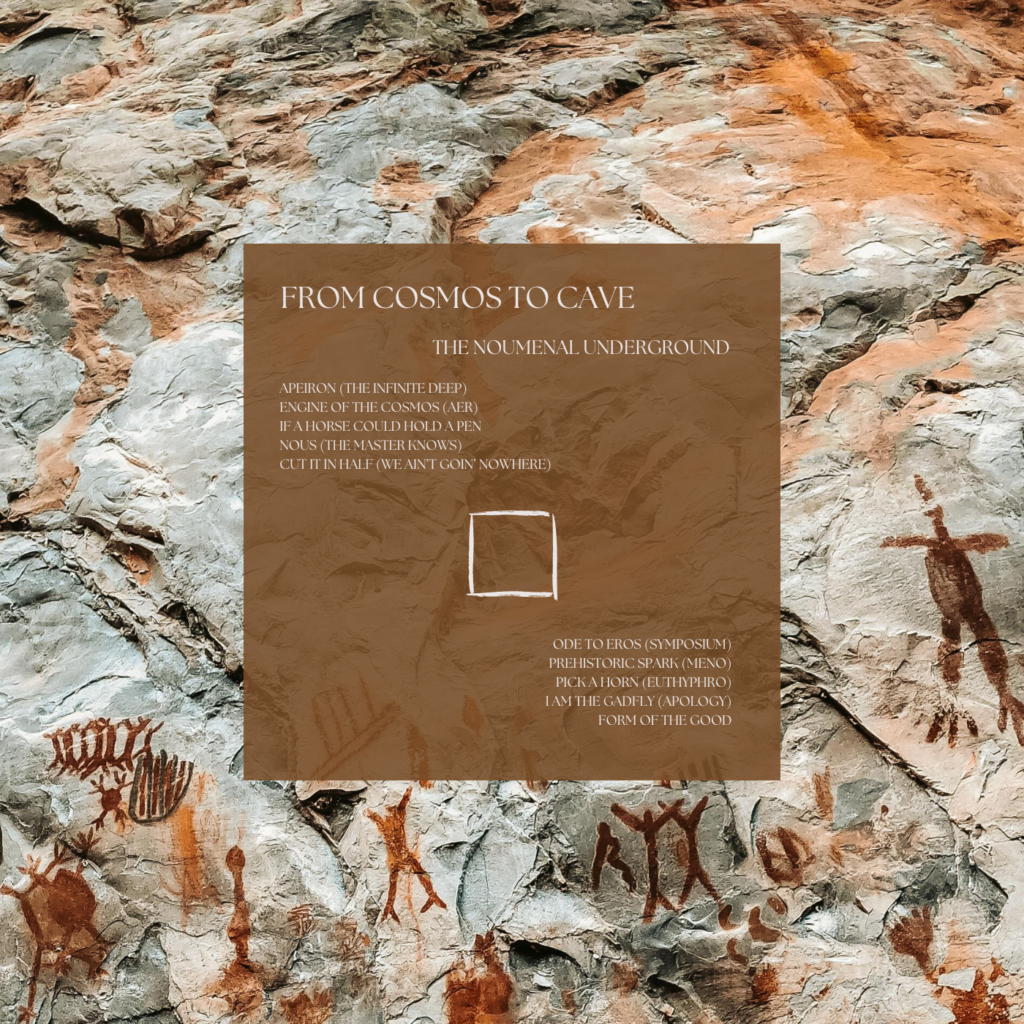
The second album moves out of the raw cosmos and into the Golden Age of Athens. From Cosmos to Cave is heavily focused on the clash between the natural universe and human intellect, featuring deep dives into Socratic inquiry (“I am the Gadfly“) and Platonic idealism (“Form of the Good“). With sweeping strings from Patty Alex, intricate acoustic work by Elias Li, and dynamic vocals from Arthur Kings and Clara Max, the album captures the drama, tension, and tragedy of a society learning how to think for itself.
Architects and Wanderers
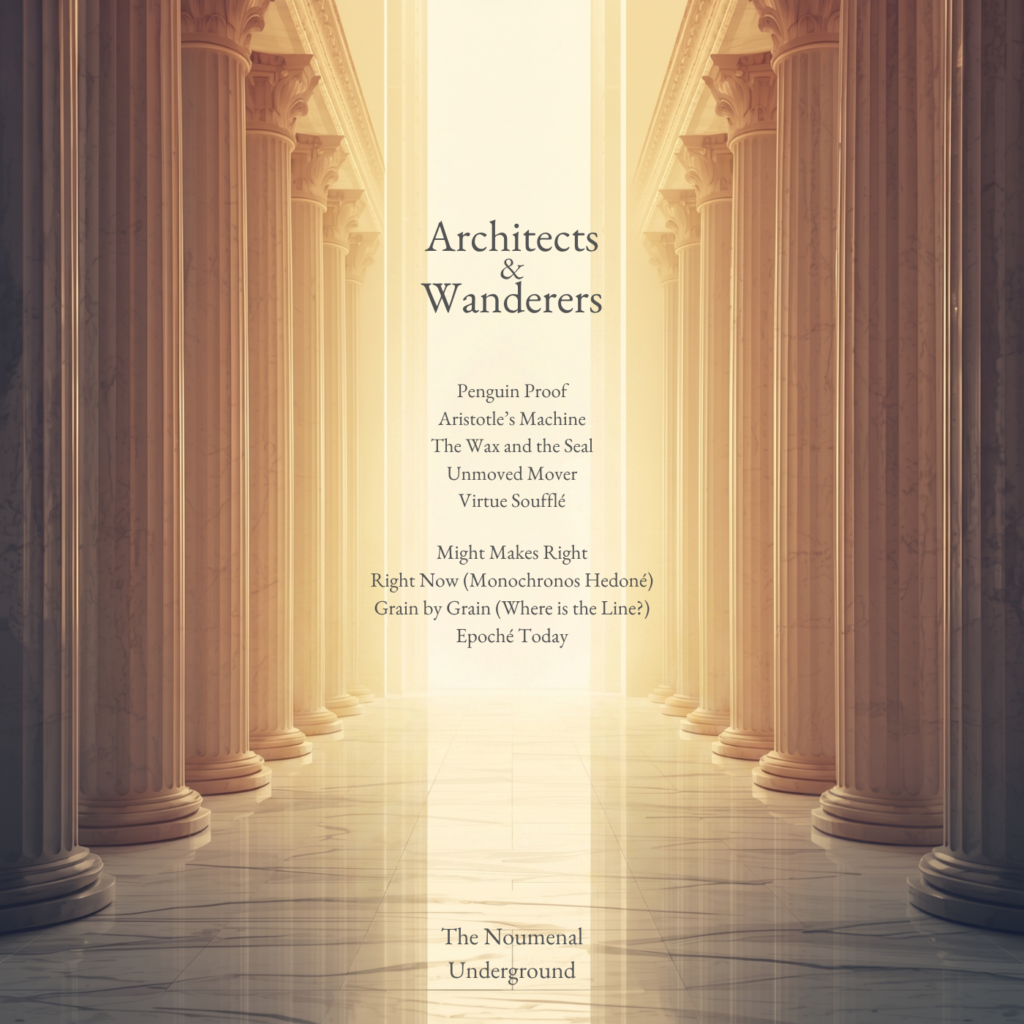
The band’s most ambitious and structurally complex record to date. The first half acts as the “Architect,” dedicated to the massive, rigid, and mechanical systems of Aristotle—from logic (“Penguin Proof“) to the “Unmoved Mover“. The second half unleashes the “Wanderers,” tearing down those structures with the aggressive Calliclean power of “Might Makes Right,” the twitchy, language-breaking paradoxes of the Megarians (“Grain by Grain“), and the radical hedonism of “Right Now”. It is a masterclass in genre-shifting, utilizing everything from Arthur Kings’ rock vocals to heavy electronic programming from Aris Vane to capture the fragmentation of the ancient world.
Demon, God, Nature
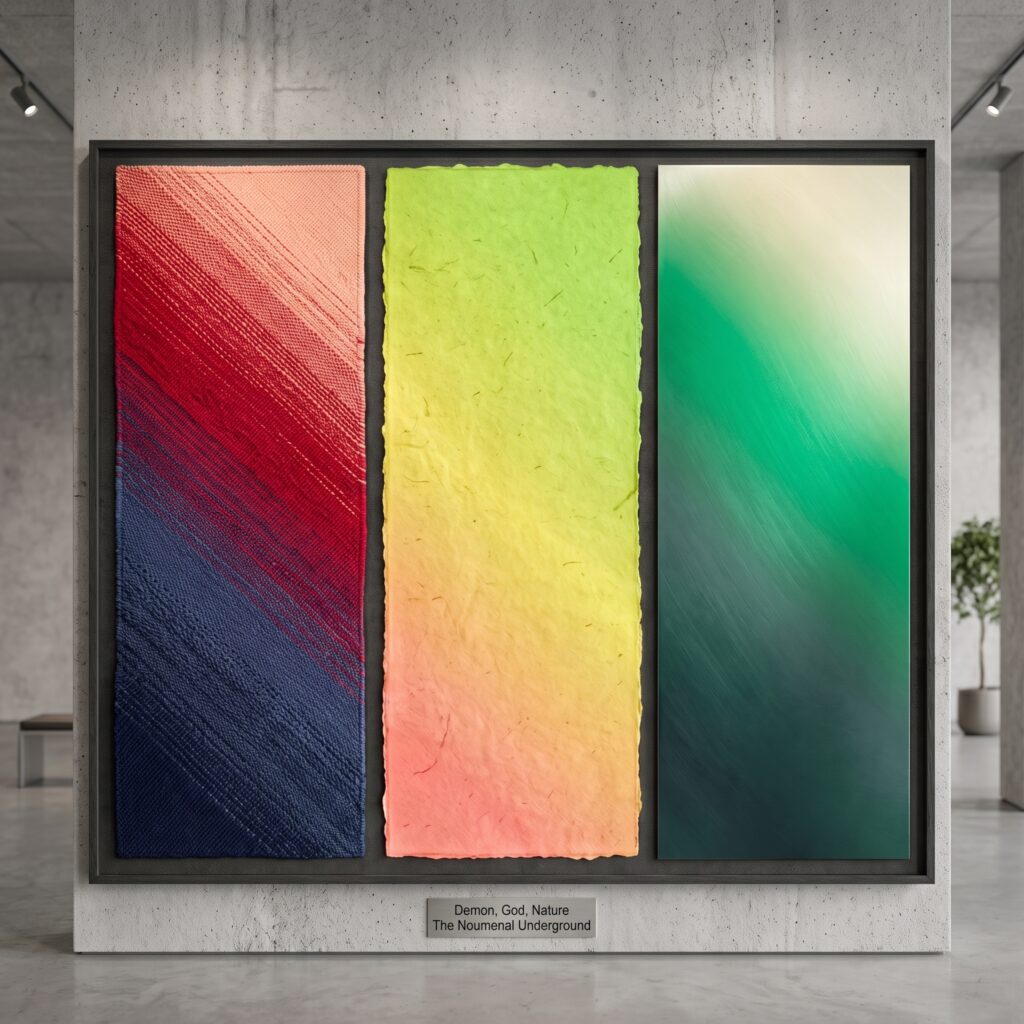
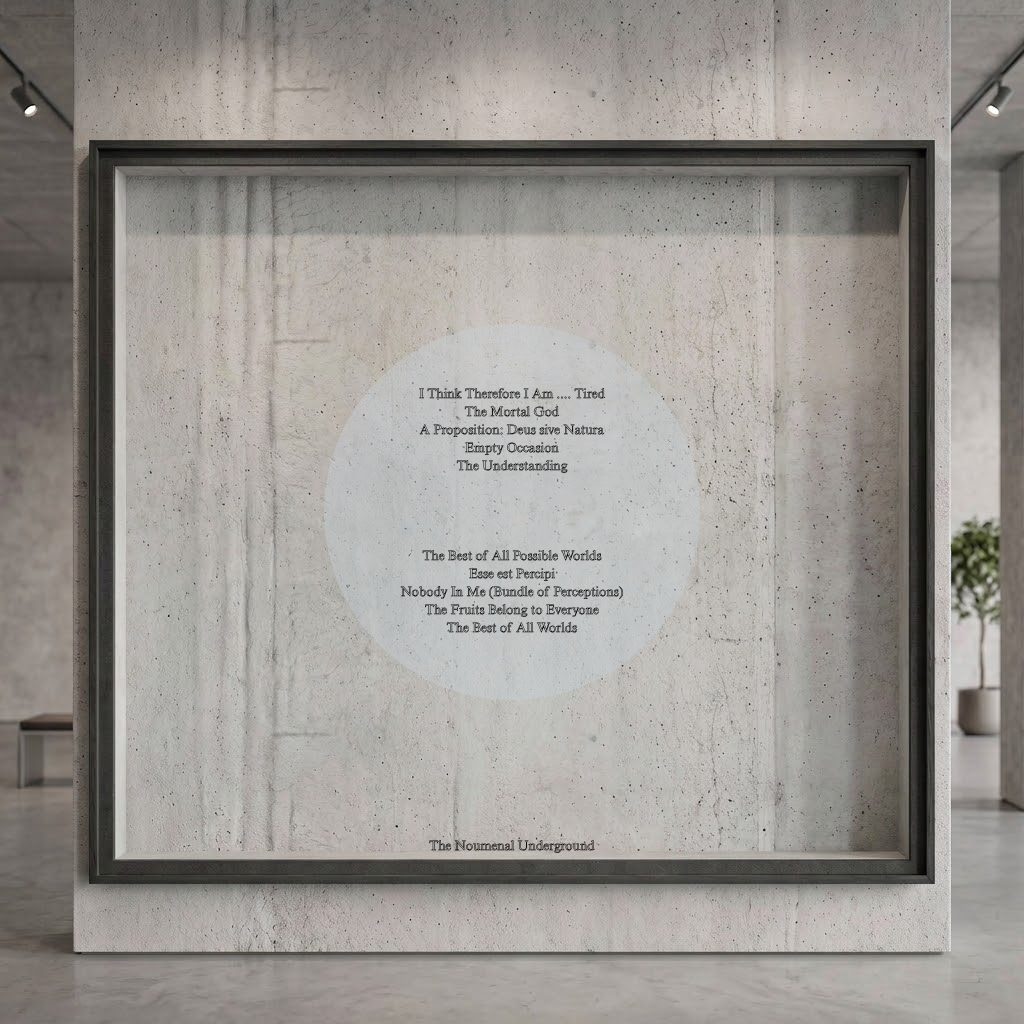
The fourth album leaps the gap from the ancient world into the early modern, opening on a man alone in a dark room who has decided to doubt everything he has ever been told. Demon, God, Nature traces the century when European thought tore itself down and rebuilt — from the paranoid arithmetic of Descartes (“I Think, Therefore I Truly Am“) through the absolute sovereign of Hobbes (“The Mortal God“) to the single infinite substance of Spinoza (“A Proposition“). The middle of the record turns strange and small: Malebranche’s world with no causal power in it at all (“Empty Occasion“), Locke’s mind as a blank page waiting to be written on (“The Understanding“), and Leibniz’s windowless monads ticking in a universe already chosen as the best available (“The Best of All Possible Worlds“). The back half breaks it apart again — Berkeley dissolving matter into perception (“Esse est Percipi“), Hume shrugging at the disappearance of his own self (“Nobody In Me“), and Rousseau complaining bitterly about the fence somebody put up (“The Fruits Belong to Everyone“). It ends with Voltaire refusing to argue at all and going outside to work (“The Best of All Worlds“). Ranging from a sovereign’s march to Irish dub, tent-revival choruses, and a cheerful little song about a world in which nothing causes anything, it is the band’s widest record — and the only one where the philosophers can hear each other.