Blog

  • Spotlight on the Underground: Aris Vane

    Spotlight on the Underground: Aris Vane

    Welcome back to the Underground.

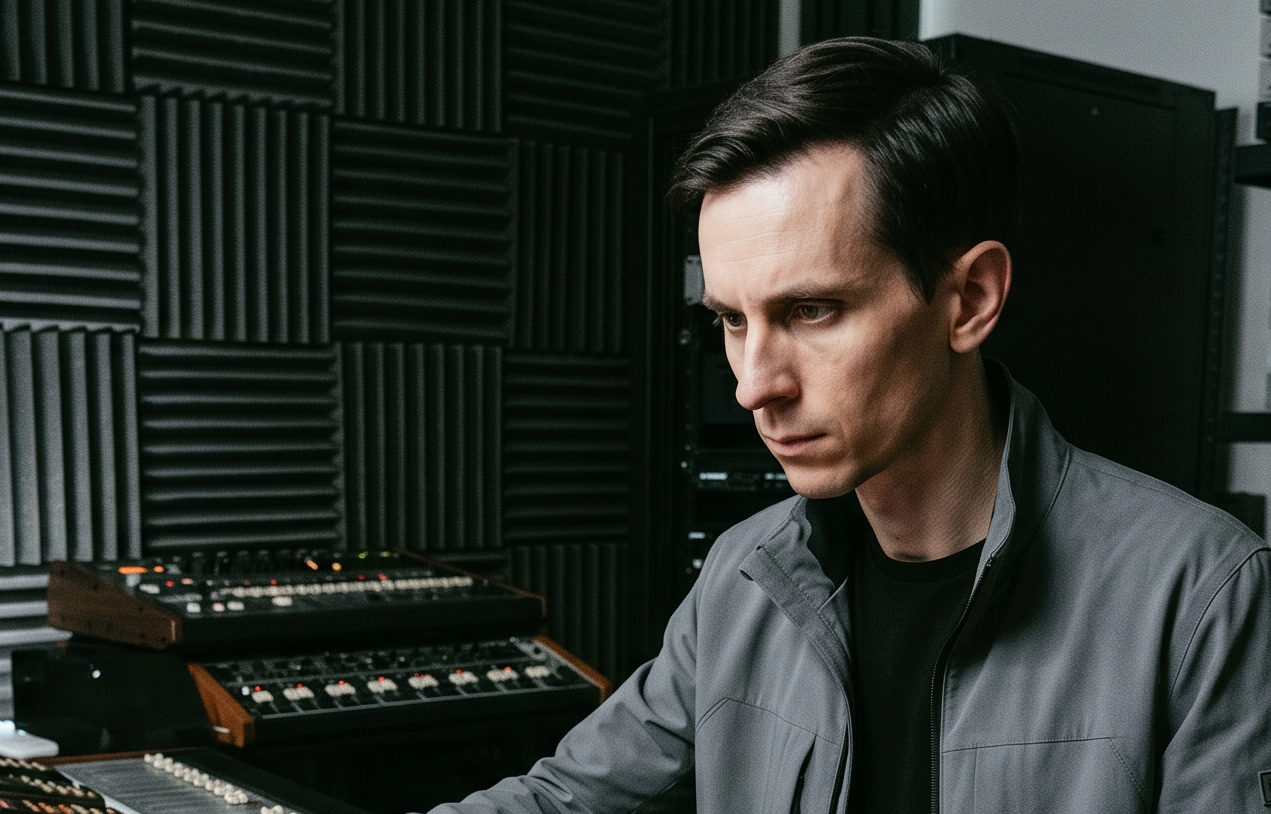
    As we wrap up our deep dive into the personnel behind Architects and Wanderers, we arrive at the final pillar of the collective. We have covered the vocalists, the instrumentalists, and the analog warmth of the mixing desk. But an architecture project of this scale requires a master planner. Up last is our Co-Producer and digital visionary: Aris Vane.

    If you look at the liner notes for our entire discography—from the chaotic noise of First Principles to the structural perfection of our latest release—you will see Aris credited as a Producer on every single track alongside Hank. If Hank is the analog filter who keeps the band grounded in the physical dirt, Aris is the architect who organizes the chaos. He shapes the electronic programming, structures the beats, and ensures that the conceptual philosophy of the music actually translates into a cohesive, driving record.

    From the Grid to the Studio

    Aris didn’t start his career making records; he spent his early twenties working as a structural engineer in Tokyo. He spent his days designing earthquake-resistant frameworks for massive commercial skyscrapers. He applies the exact same methodology to music production. When he looks at a sprawling, disorganized pro-tools session filled with Arthur’s heavy guitars and Dave’s frantic drums, Aris sees load-bearing walls and tension cables. He is the one who steps in to decide where a track needs structural reinforcement and where it needs to collapse.

    The Bouldering Equation

    Producing for a ten-piece philosophy-rock collective is a high-stress environment, but Aris burns off the excess adrenaline in complete silence. He is obsessively dedicated to indoor rock climbing and bouldering. He refuses to climb with music on, preferring to treat the wall as a massive, physical equation. He will spend hours staring at a route, calculating the exact geometry and leverage required before ever touching a hold—a quiet, calculated mindset that he brings directly into the producer’s chair.

    The Calculator Collection

    While Hank is scavenging for vintage television tubes and Martin is repairing Soviet synths, Aris has a much quieter, more organized obsession. His studio desk is completely covered in his collection of obscure, LED-display pocket calculators from the 1970s. He loves the raw, primitive computing power of early digital engineering. He frequently uses them during recording sessions—not to calculate anything specific, but just to listen to the satisfying, mechanical click of the buttons when he is trying to lock in a BPM.

    Aris’s Essential Production Tracks

    Aris’s influence as a producer is woven into the DNA of every song we have ever released, but there are a few key tracks where his structural oversight and digital polishing are the undeniable stars of the show:

    • ATOMOS” (First Principles): While Hank pushed this track into analog decay, Aris built the frantic, shattered electronic beat that gives Democritus’s theory its hyper-kinetic, atomic energy.
    • Cut it in Half (We Ain’t Goin’ Nowhere)” (From Cosmos to Cave): Capturing Zeno’s paradox meant creating a track that constantly loops back on itself. Aris arranged the glitching, stuttering structure that makes the song feel like a mathematical nightmare you cannot escape.
    • Penguin Proof” & “Aristotle’s Machine” (Architects and Wanderers): The opening tracks of our third album are a masterclass in Aris’s production style. He perfectly organized the dense layers of synthesizers, live strings, and rhythm section to create the cold, flawless blueprints of Aristotelian logic.
  • Spotlight on the Underground: Hank Stirling

    Spotlight on the Underground: Hank Stirling

    Welcome back to the Underground.

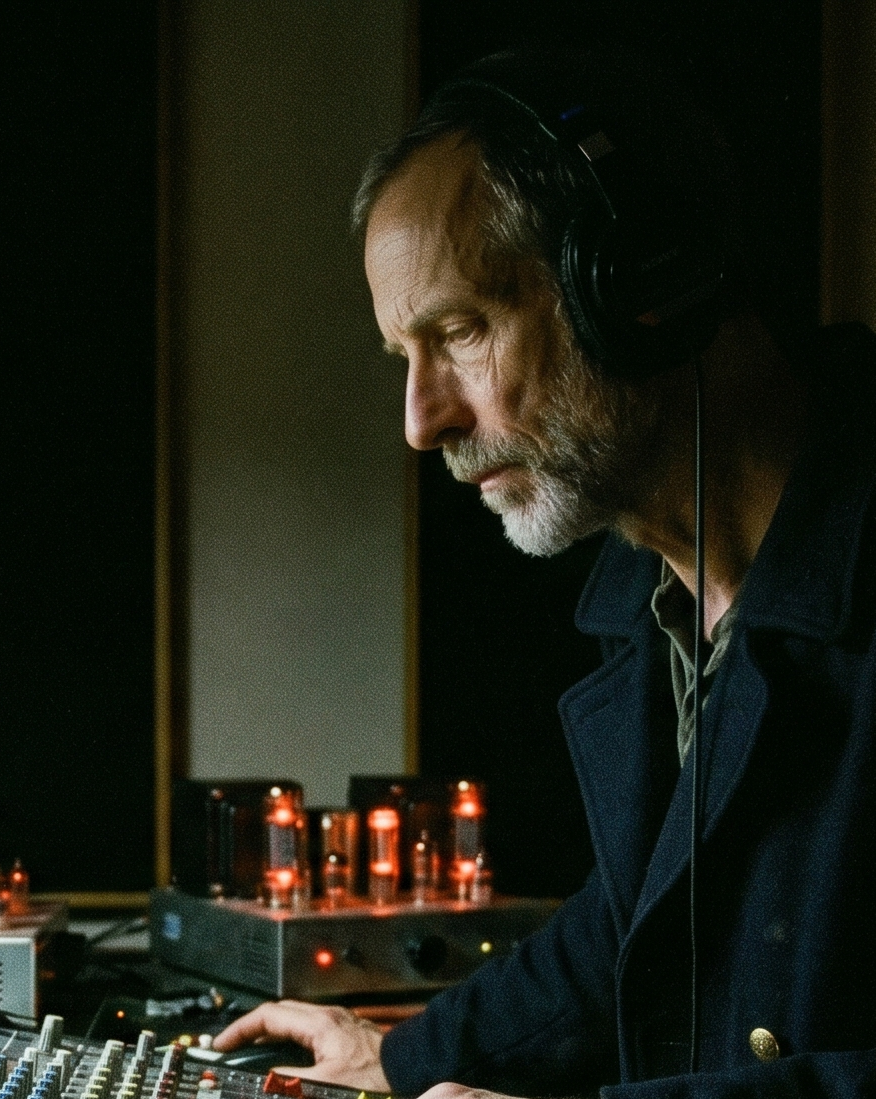
    As we dissect the intricate machinery behind the band, we have highlighted the vocalists, the rhythm section, and the digital architects. But now it is time to talk about the man who actually builds the room we all play in. Up next is the mastermind behind the mixing board: Hank Stirling, our sole Analog Producer.

    Take a look at the liner notes for First Principles, From Cosmos to Cave, or our massive new release Architects and Wanderers. You will notice Hank’s name attached to every single track. When you are blending acoustic guitars with glitching drum machines, or combining sweeping classical cellos with heavy rock distortion, the mix can turn into an absolute muddy disaster in seconds. Hank is the filter. He is the one who takes ten completely different sonic ideas and forces them to coexist in the same atmospheric space.

    From the Abyss to the Soundboard

    Hank’s superhuman ear for detail didn’t start in a recording studio. Before moving into music production, he spent years stationed deep underwater as a submarine sonar technician. Staring at acoustic screens in total darkness, he was trained to isolate microscopic auditory anomalies in the middle of a chaotic, deafening ocean. He treats the mixing desk the exact same way. If a bass frequency is clashing with a synth patch by a fraction of a decibel, Hank hears it immediately and mercilessly cuts it out.

    The Tube Architect

    While Martin lives in the digital world of synthesizers, Hank is deeply, stubbornly rooted in the analog. He refuses to use modern digital plugins to warm up our tracks. Instead, he hand-builds custom vacuum tube amplifiers, often using copper wiring and glass tubes salvaged from 1950s televisions he finds at estate sales. Every piece of vocal distortion and heavy guitar fuzz you hear on our records has physically passed through a glowing piece of history sitting on Hank’s workbench.

    The Ghost Greenhouse

    You might assume a guy who lives in a dark studio surrounded by hot electrical equipment would need a loud, chaotic escape. But Hank’s downtime is incredibly fragile. He cultivates a collection of incredibly rare ghost orchids in a highly regulated, climate-controlled greenhouse attached to the back of the studio. The orchids require a painfully specific, unwavering balance of humidity and temperature to survive—a quiet, biological reflection of the exact balance he tries to strike on our records.

    Hank’s Essential Production Tracks

    Hank is credited as producer on every track the Noumenal Underground has ever released, but there are a few specific songs where his analog wizardry is undeniably the star of the show:

    • ATOMOS” (First Principles): To capture the feeling of the universe breaking down into indivisible parts, Hank ran the entire final mix through a series of degrading analog tape machines, giving the track a raw, physically disintegrating texture.
    • Nous (The Master Knows)” (From Cosmos to Cave): Balancing Arthur’s heavy electric guitar, Reggie’s vintage organ, and Patty’s deep cello all within the same mid-range frequency is an engineering nightmare. Hank managed to keep every instrument distinctly massive without letting them bleed into one another.
    • Right Now (Monochronos Hedone)” (Architects and Wanderers): Capturing the radical, chaotic hedonism of the Cyrenaics meant pushing the studio gear to its absolute breaking point. Hank practically red-lined the entire mixing desk, using his custom tube amps to give the high-BPM club energy an aggressively gritty, analog warmth.
  • Spotlight on the Underground: Clara Max

    Spotlight on the Underground: Clara Max

    Welcome back to the Underground.

    As we continue to profile the collective behind the massive sound of Architects and Wanderers, it is time to focus on the breath and atmosphere of the band. Up next is our multi-instrumentalist and ethereal voice: Clara Max, handling woodwinds, brass, and vocals.

    In a band built on heavy analog distortion, aggressive rhythm sections, and cold electronic programming, the music constantly runs the risk of becoming too dense or mechanical. Clara provides the necessary oxygen. Whether she is cutting through a heavy rock progression with a blistering saxophone line, weaving a delicate flute melody through an acoustic arrangement, or delivering soaring, atmospheric vocals, she brings a vital, organic humanity to our heaviest philosophical tracks.

    From the Treeline to the Studio

    Clara’s incredible breath control and lung capacity were not just developed in practice rooms. Before committing to the Underground, she spent years working as a high-altitude mountain guide in the Andes. Spending weeks above the treeline in dangerously thin air fundamentally changed how she approaches breathing and phrasing. When she plays the saxophone or sings, there is a distinct, deliberate pacing to her breath—a survivalist’s understanding of exactly how to ration oxygen to reach the summit of a track.

    The Astronomer

    Her connection to the cosmos goes far beyond our album concepts. In her downtime, Clara is an obsessive restorer of antique brass telescopes. She spends hours stripping down tarnished 18th-century navigational tools, polishing the lenses, and recalibrating the optics. She frequently brings her restored telescopes out to rural recording sessions, spending the hours between vocal takes mapping the constellations. It is a quiet, meditative practice that perfectly aligns with a band trying to map the structure of the universe.

    Silent Communication

    While her entire job in the band revolves around sound, Clara has a deep appreciation for the unsaid. She is completely fluent in American Sign Language. She often notes that understanding how to communicate entirely through physical movement and space has dramatically influenced how she plays the flute and saxophone. She treats her solos less like a string of notes and more like physical gestures, giving her melodies an incredibly expressive, almost conversational quality.

    Clara’s Essential Tracks

    Clara’s ability to seamlessly switch between brass, woodwinds, and lead vocals makes her one of the most versatile musicians in our lineup. Here are the essential tracks where she completely takes over:

    • Everything is Fire” (First Principles) & “Engine of the Cosmos (Aer)” (From Cosmos to Cave): When the tracks need to breathe and burn, Clara brings out the saxophone. On our debut, she uses it to match the chaotic, blazing energy of Heraclitus. On our sophomore record, she delivers a standout, breathy performance that acts as the physical embodiment of Anaximenes’ universal air.
    • Apeiron (The Infinite Deep)” & “Form of the Good” (From Cosmos to Cave): Clara acts as the ultimate bookend for our second album. She opens the record with haunting lead vocals in the formless void of Anaximander, and she closes the album by stepping entirely into the light, delivering pure, ethereal vocals to represent the ascension into Platonic forms.
    • The Wax and the Seal” (Architects and Wanderers): On our latest release, Clara switches to the flute, weaving a delicate, sharp, and highly organic melody that cuts perfectly through the rigid, mechanical blueprints of Aristotle’s architectural logic.

  • Spotlight on the Underground: Martin Black

    Spotlight on the Underground: Martin Black

    Welcome back to the Underground.

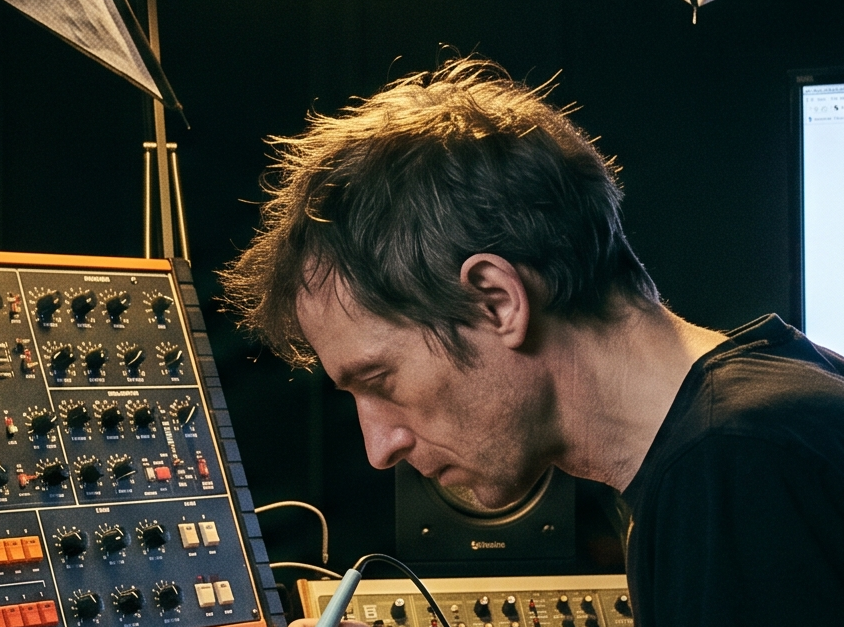
    As we continue breaking down the core elements of the collective that brought Architects and Wanderers to life, we have to look at the digital architecture. Up next is the mastermind behind our electronic pulse: Martin Black, handling synthesizers, drum machines, and electronic programming.

    When you are tackling ancient philosophy, it is incredibly easy to fall into the trap of sounding archaic—using acoustic instruments to mimic the past. Martin does the exact opposite. He takes the oldest concepts in human history and forces them through complex, modern circuitry. Whether he is building towering, rigid structures with analog synths or programming frantic, glitching drum machines, Martin ensures that the Underground always sounds like the future analyzing the past.

    From the Atmosphere to the Amplifier

    Before he was building soundscapes, Martin was analyzing real ones. He spent years working as a meteorologist in the UK, tracking atmospheric pressure systems and storm fronts across the North Sea. He treats synthesizers exactly the same way he treats the weather—as massive, invisible systems of pressure and release. When he is dialing in a synth patch, he isn’t just looking for a note; he is trying to create a specific climate for the song to live inside.

    The Soviet Surgeon

    When Martin isn’t programming beats for the band, his workbench looks like a Cold War electronics graveyard. He is obsessively dedicated to hunting down and repairing vintage, obscure Soviet-era synthesizers. Because the schematics are rarely available in English, he essentially reverse-engineers the circuitry from scratch, wielding his soldering iron like a scalpel to bring completely dead, heavily distorted analog machines back to life to feature on our records.

    Geometry in the Sky

    It sounds almost poetic for a guy obsessed with atmospheric pressure, but Martin’s primary escape from the studio is competitive kite-flying. He custom-builds massive, structurally complex geometric kites from carbon fiber and ripstop nylon, entering them into professional tournaments. For him, it’s all about mathematics, tension, and wind resistance—a quiet, analog contrast to the heavy digital programming he does for the band.

    Martin’s Essential Electronic Tracks

    Martin’s fingerprints are all over the digital framework of our discography. Here are a few essential tracks where his synthesizers and drum machines completely dictate the philosophy:

  • Spotlight on the Underground: Dave Edins

    Spotlight on the Underground: Dave Edins

    Welcome back to the Underground.

    As we continue breaking down the core elements of the collective that brought Architects and Wanderers to life, we have to look at the engine room. Up next is the rhythmic heartbeat of the band: Dave Edins, our master of drums and percussion.

    When you are dealing with music that fluctuates between dense electronic programming and chaotic, raw rock energy, you need a timekeeper who is both a machine and a maniac. Dave sits precisely in that intersection. He provides the relentless, physical drive that pushes our philosophical explorations out of the academic realm and into the kinetic, sweating reality of a live performance.

    From Blueprints to Breakbeats

    Dave’s mathematical precision on the kit is rooted in his background as a former architectural draftsperson from Chicago. He spent years meticulously drawing out the structural load-bearing requirements for commercial skyscrapers. When he sits down at the drum kit, he treats the arrangement the exact same way—calculating exactly how much weight and tension a groove can support before the entire song collapses, and then playing right on that breaking point.

    The Iron Collector

    When Dave isn’t hitting things with sticks, he is usually scouring antique shops and rural flea markets for heavy metal. He is an avid collector and restorer of 19th-century cast-iron cookware. He has a whole setup in his garage dedicated to stripping off decades of rust and re-seasoning ancient skillets and Dutch ovens. There is something beautifully tangible about it—taking an object that is incredibly heavy, historical, and durable, and making it functional again.

    Mountain Endurance

    Drumming for the Underground requires immense stamina, especially on the blistering Pre-Socratic tracks. Dave builds that endurance through a surprisingly intense hobby: he competes in extreme, off-road mountain unicycling. Navigating steep, rocky inclines on a single wheel requires an insane amount of core balance, hyper-focus, and a complete lack of fear—which is exactly what he brings to the studio when we hand him a chaotic, high-tempo track.

    Dave’s Essential Drum & Percussion Tracks

    Dave’s playing anchors almost our entire discography, but here are a few critical moments where his kit work dictates the entire direction of the philosophy:

    • Uncreated Sphere” (First Principles): Channeling Parmenides requires an immovable foundation. Dave lays down a massive, relentless drum groove that feels entirely locked in place, refusing to waver or change alongside the heavy drone distortion.
    • I am the Gadfly (Apology)” (From Cosmos to Cave): When Socrates goes on trial, the music needs teeth. Dave delivers an aggressive, punk-infused rhythm section that perfectly matches Arthur’s unapologetic, defiant vocals.
    • The Wax and the Seal” & “Virtue Souffle” (Architects and Wanderers): On our newly released third album, Dave proves he isn’t just a heavy hitter. He steps away from the standard drum kit for highly intricate percussion work. He uses hand drums, shakers, and auxiliary percussion to add a tight, sharp, and highly calculated rhythm to the rigid systems of Aristotelian logic.

  • Spotlight on the Underground: Ben Espinoza

    Spotlight on the Underground: Ben Espinoza

    Welcome back to the Underground.

    As we continue mapping out the personnel behind Architects and Wanderers, we have to talk about the absolute foundation of the music. Up next is the undeniable anchor of our low end: Ben Espinoza, handling bass and backing vocals.

    When your lyrics are tangled up in the abstract heavens of Platonic idealism or the mathematical paradoxes of Megarian logic, the music risks floating away entirely. Ben’s job is to grab those lofty, intellectual concepts and drag them forcefully back down to earth. His bass lines are the physical gravity of the Underground. Whether he is locking in with Dave’s frantic drum fills or holding down a heavy, droning groove beneath the chaotic synthesizers, Ben ensures that every philosophical argument we make hits you squarely in the chest.

    From the Abyss to the Underground

    Ben’s ability to remain perfectly steady beneath a crushing wall of sound comes from his previous life. Before he picked up a bass full-time, he worked as a commercial deep-sea welder down on the Gulf Coast. Spending hours at the bottom of the ocean in total darkness, under immense atmospheric pressure, changes how a person internalizes rhythm and calm. He treats the low end of our mixes exactly like the ocean floor—dark, heavy, and completely unshakable.

    The Espresso Engineer

    When the recording sessions stretch into the early hours of the morning, Ben is the one keeping the band’s nervous systems functioning, but he refuses to drink standard drip coffee. He is completely obsessed with restoring vintage, lever-operated Italian espresso machines. He frequently brings a 60-pound, brass-clad hunk of 1970s espresso machinery into the studio, carefully dialing in the pressure and temperature to pull the perfect shot between takes.

    Dead Economies

    While the rest of the band debates the ethical frameworks of ancient empires, Ben collects their money. He is a passionate numismatist with a highly specific focus: he only collects rare, obsolete currency from countries, republics, and empires that no longer exist. He loves the tangible history of holding a heavy silver coin that used to dictate the power of an entire civilization, but is now just a quiet piece of metal sitting on top of his bass amplifier.

    Ben’s Essential Bass Tracks

    Ben’s bass playing is the heartbeat of our entire discography, but there are a few moments where his deep, driving grooves completely steal the show. Here are three essential tracks to hear him at his heaviest:

    • Everything is Fire” (First Principles): To capture the chaotic, ever-changing universe of Heraclitus, Ben lays down a relentless, blistering bass line that never sits still, pushing the tempo and forcing the rest of the band to keep up with the burn.
    • Apeiron (The Infinite Deep)” (From Cosmos to Cave): Opening our second album in the boundless void of Anaximander, Ben’s bass is the first thing that emerges from the darkness. He provides a massive, formless low-end rumble that slowly gives the universe its physical shape.
    • Unmoved Mover” (Architects and Wanderers): The ultimate flex of structural power. On the Architect side of our third record, Ben provides the rigid, gravitational center of Aristotle’s cosmos—playing a heavy, cyclical, and completely unyielding groove that the entire rest of the track orbits around.

  • Spotlight on the Underground: Patty Alex

    Spotlight on the Underground: Patty Alex

    Welcome back to the Underground.

    As we dissect the moving parts that built Architects and Wanderers, we arrive at the absolute core of the band’s cinematic scale. Up next is our orchestrator, string virtuoso, and structural visionary: Patty Alex, handling violin and cello.

    When you are trying to capture the sheer weight of a concept like Platonic idealism or the cosmic scale of the Hellenistic era, a standard rock rhythm section simply isn’t enough. You need music that reaches higher and hits deeper. Patty elevates the Underground from a gritty philosophy-rock project into a sprawling, symphonic experience. Her sweeping string arrangements add classical majesty to the records, effectively translating massive, intangible ideas into lush, tangible soundscapes.

    From the Conservatory to the Underground

    Patty’s precision is not an accident; it is the result of brutal classical conditioning. She trained for years as a classical cellist at a prestigious conservatory in Vienna. However, she famously dropped out weeks before her final recitals, feeling that the rigid classical world was too focused on reproducing the past rather than building something new. She traded the concert halls for the underground music scene, bringing a level of ruthless technical perfection to our most chaotic tracks.

    The Sourdough Architect

    While Hank is obsessing over the analog mix and Arthur is rewiring pedals, Patty is usually maintaining a completely different kind of science experiment in the studio kitchen. She is an obsessive baker. Her particular specialty is aggressively elaborate, naturally leavened sourdough bread. She treats her sourdough starters with the exact same meticulous care she gives her cello bows, frequently showing up to early morning tracking sessions carrying massive, steaming loaves to feed the crew.

    Night Shifts

    Patty’s connection to the shadows doesn’t end when we leave the studio. In her downtime, she volunteers her nights at a local bat sanctuary, helping to rehabilitate injured urban wildlife. She has often mentioned that there is a quiet, rhythmic beauty to watching them fly—a kind of natural, mathematical syncopation that she actively tries to replicate in her intricate violin phrasing.

    Patty’s Essential String Tracks

    While Patty occasionally lends her voice to the mix, her true language is spoken through her strings. Here are the essential tracks across our discography where her violin and cello work completely define the sonic landscape:

    From First Principles:

    • Everything is Fire“: To capture the relentless, burning drive of Heraclitus, Patty lays down a dark, driving cello line that acts as the heavy undercurrent to the track’s chaotic rhythm.
    • Love & Strife“: Patty switches to the violin, providing sweeping, interconnected melodies that mimic the deep, binding forces of the early cosmos.

    From From Cosmos to Cave:

    • If a Horse Could Hold a Pen“: A raw, acoustic critique of human-made gods, driven forward by Patty’s sweeping, cynical violin arrangements paired with Elias’s acoustic guitar.
    • Nous (The Master Knows)“: Channeling the cosmic mind, Patty brings out the cello to provide deep, rich resonance, grounding the band’s heavy electric rock progression.

    From Architects and Wanderers:

    • The Wax and the Seal“: Patty’s violin cuts perfectly through the mechanical logic of Aristotle, adding a sharp, organic precision to the rigid architectural blueprints of the track.
    • Virtue Soufflé”: Delivering profound emotional weight, her commanding cello performance anchors the golden mean, finding the perfect balance between sonic excess and deficiency.

  • Spotlight on the Underground: Elias Li

    Spotlight on the Underground: Elias Li

    Welcome back to the Underground.

    Continuing our deep dive into the collective behind Architects and Wanderers, we are turning our attention to the organic soul of the band: Elias Li, our primary acoustic and electric guitarist, and soulful male vocalist.

    When you are building tracks around the cold, mechanical logic of the ancient system-builders or the chaotic programming of modern electronic beats, it is incredibly easy for the music to lose its humanity. Elias is the antidote to that. Whether he is laying down intricate, finger-picked acoustic arrangements or delivering smooth, deeply emotive lead vocals, his presence is a constant reminder of the physical, natural world the ancient philosophers were actually trying to decipher.

    From the Treeline to the Studio

    Before he was navigating the complexities of Aristotelian logic, Elias spent years working as a park ranger deep in the damp, dense forests of the Pacific Northwest. He is a guy who is profoundly comfortable with isolation and silence. That background translates directly into his playing style—he knows exactly when to let a chord ring out and breathe, leaving necessary space inside our most crowded and claustrophobic tracks.

    The Woodcarver

    Elias’ hands are never still. When he doesn’t have a guitar in his lap, he is usually covered in wood shavings. He is a meticulous woodcarver, spending hours whittling massive, intricate statues of mythological creatures out of cedar and redwood blocks. You will usually find a half-finished griffin or a wooden hydra sitting on top of his amplifier during rehearsals.

    Bouncing Signals

    While Martin and Aris handle the modern electronic architecture of the band, Elias has his own obsession with frequencies. He is a licensed amateur ham radio operator. Late at night, long after the recording sessions have wrapped, he sets up his antennas and attempts to bounce radio signals off the ionosphere, trying to make contact with operators on the other side of the planet. For a guy singing about the interconnectedness of the cosmos, it is a remarkably fitting hobby.

    Elias’s Essential Solo Vocal Tracks

    While Elias often weaves his voice into massive harmonies with Reggie and Arthur, there are crucial moments across our discography where his soulful vocals stand entirely on their own. When the philosophy gets deeply personal or structurally complex, we hand the mic to him:

    • Fundamental Flow” (First Principles): A grounding moment on our chaotic debut. Elias takes the lead to explore the deep, interconnected flow of the early cosmos.
    • Pick a Horn (Euthyphro)” (From Cosmos to Cave): Elias delivers incredibly smooth, searching vocals over pulsing synthesizers, dissecting the unanswerable dilemma of what makes something truly “good.”
    • Penguin Proof” & “Unmoved Mover” (Architects and Wanderers): On the Architect side of our third album, Elias takes center stage twice. He provides the solo voice for the rigid, calculated logic of Aristotle’s massive world-building systems, keeping the towering intellectual architecture grounded in human emotion.
  • Spotlight on the Underground: Reggie Olsen

    Spotlight on the Underground: Reggie Olsen

    Welcome back to the Underground.

    As we continue to pull back the curtain on the musicians driving Architects and Wanderers, it is time to spotlight the harmonic powerhouse of the band: Reggie Olsen, our resident keyboardist and lead female rock vocalist.

    When the philosophical concepts get too tangled, or the rhythm section threatens to pull the track into complete chaos, Reggie is the anchor. She provides the lush, vintage warmth of Hammond organs, electric pianos, and sweeping synthesizers that give the Underground its distinct atmosphere. But beyond her instrumental prowess, her soaring, classic-rock-inspired vocals provide the emotional counterweight to the band’s heaviest ideological battles.

    From the Desert to the Underground

    Reggie grew up in the high desert of Taos, New Mexico, completely surrounded by stark landscapes and a deeply ingrained local art scene. She didn’t start on a pristine grand piano; her first instrument was a beat-up, secondhand electric organ she found at a swap meet. That gritty, desert-worn aesthetic still bleeds into her playing today, ensuring that even our most ethereal synthesizer parts have a layer of dust and distortion on them.

    The Arcade Architect

    Reggie’s fascination with keys and buttons doesn’t stop at the synthesizer. When she isn’t in the vocal booth, she is hunched over a workbench with a soldering iron. She is an avid restorer of vintage 1980s arcade cabinets, frequently repairing dead motherboards and rewiring joysticks to bring classic Galaga and Centipede machines back from the dead. That same meticulous, electrical engineering mindset is exactly how she builds her custom synth patches from scratch.

    Studio Botany

    Most musicians bring a notebook or a water bottle to their recording sessions. Reggie brings a terrarium. She cultivates a massive, thriving collection of carnivorous plants—Venus flytraps, pitcher plants, and sundews—and sets them up around her keyboards whenever she tracks. She claims the slow, methodical, predatory nature of the plants keeps her grounded during the frantic, high-BPM energy of a session.

    Reggie’s Essential Solo Vocal Tracks

    While Reggie frequently trades verses or provides massive harmonies alongside Arthur, her solo vocal performances are where her raw power truly shines. There are times when the track demands a single, commanding presence, and Reggie delivers.

    Everything is Fire” (First Principles) Channeling the burning, relentless drive of Heraclitus. Reggie’s commanding vocals cut through the heavy distortion and driving drum machines to declare that the universe never sits still.

    Engine of the Cosmos (Aer)” (From Cosmos to Cave) A deeply atmospheric track where Reggie provides the breathing, pulsating vocal embodiment of Anaximenes’ theory of air as the universal substance, perfectly complementing her own sweeping keyboard arrangements.

  • Spotlight on the Underground: Arthur Kings

    Spotlight on the Underground: Arthur Kings

    Welcome back to the Underground.

    With the massive release of Architects and Wanderers officially out in the wild, we are pulling back the curtain on the collective that makes this genre-fluid machine run. Up first is the voice that grounds our heaviest philosophical breakdowns: Arthur Kings, our lead vocalist and electric guitarist.

    When you are trying to translate the rigorous logic of Parmenides or the chaotic hedonism of Callicles into a track, you need a frontman who can navigate the intellectual weight without sounding like a college professor reading a syllabus. Arthur brings a raw, predatory, and incredibly physical energy to the microphone. He takes ancient theories and turns them into anthems you can actually feel in your chest.

    But who is the guy behind the mic?

    From the Coast to the Underground

    Arthur hails from a remote, freezing coastal fishing town in Nova Scotia. Long before he was shouting about Socratic dialogue over heavy analog distortion, he cut his teeth playing in chaotic, ear-splitting punk bands out in Halifax. That raw, underground edge is exactly what allows his vocal performances and heavy guitar work to cut right through the band’s dense electronic programming.

    The Clockmaker

    If you ever walk into the studio and hear the frantic, rhythmic ticking of a dozen tiny metronomes, you have found Arthur’s workbench. When he isn’t tracking vocals or dialing in his guitar tone, Arthur is an obsessive horologist. He spends his downtime meticulously restoring antique pocket watches and mechanical clocks. There is a strange, poetic irony to it—the guy singing about the eternal, unchanging universe of the Pre-Socratics spends his free time literally trying to fix and control time itself.

    Studio Survival

    Arthur does not run on coffee, and he absolutely rejects the late-night pizza runs that fuel the rest of the band. He is strictly powered by Earl Grey tea. He drinks it in excessive, almost alarming quantities, brewing massive pots of it at 3:00 AM while obsessively rewiring his guitar pedals. If you challenge him to a debate on Stoic ethics, be prepared: he is a former competitive fencer, and he treats verbal arguments with the exact same aggressive, striking precision he used on the piste.

    Arthur’s Essential Solo Vocal Tracks: While we often use massive, layered vocal arrangements, sometimes the philosophy demands a single, unwavering voice. Here are three essential tracks where Arthur takes the mic completely solo, with no backing harmonies to soften the blow: